Nitya Gita Recommended first
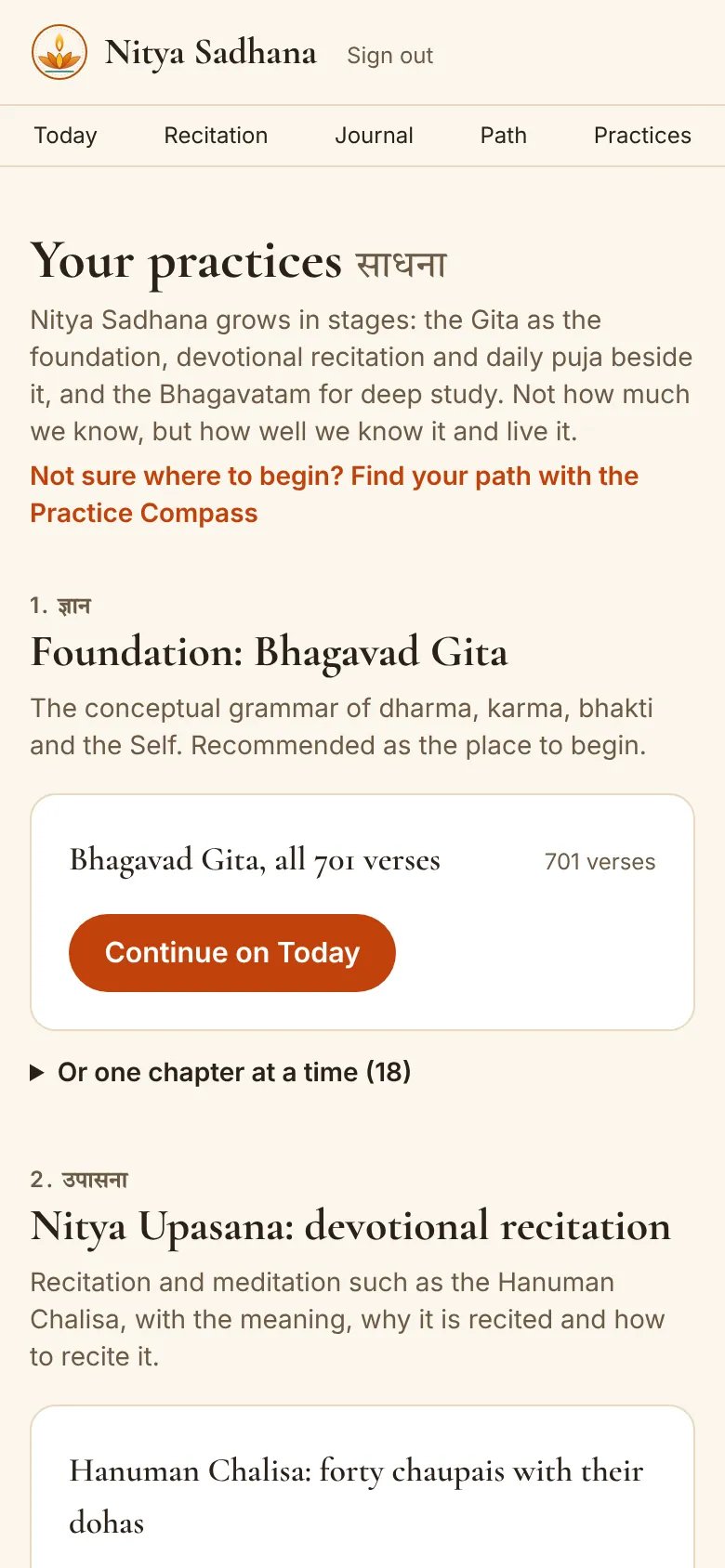
The Bhagavad Gita, 701 verses, one at a time. Receive 1 to 3 verses a day in one message, and start at any verse.

Home / Practices
Nitya Gita, Nitya Upasana and Nitya Puja are all open today. If you are not sure where to begin, begin with Nitya Gita.
The Bhagavad Gita, 701 verses, one at a time. Receive 1 to 3 verses a day in one message, and start at any verse.
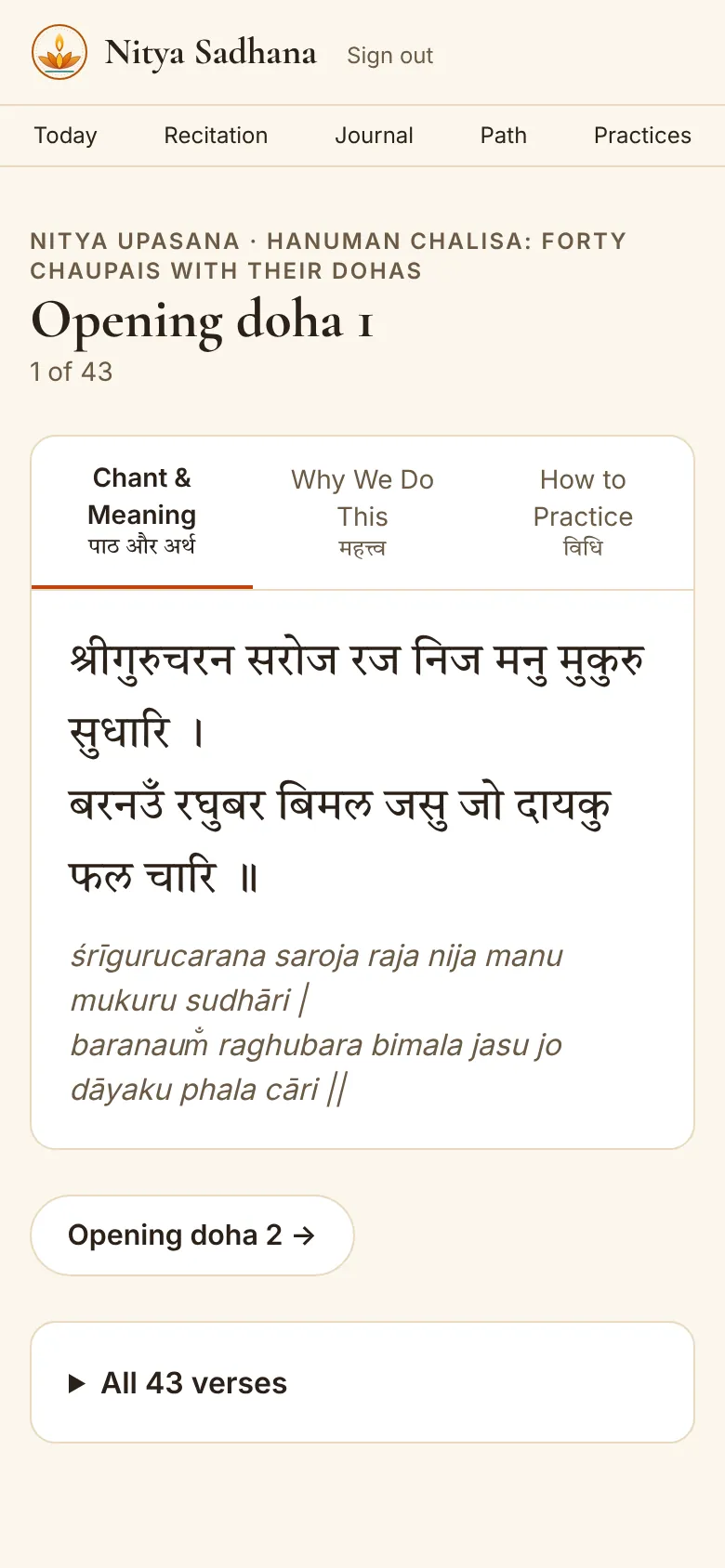
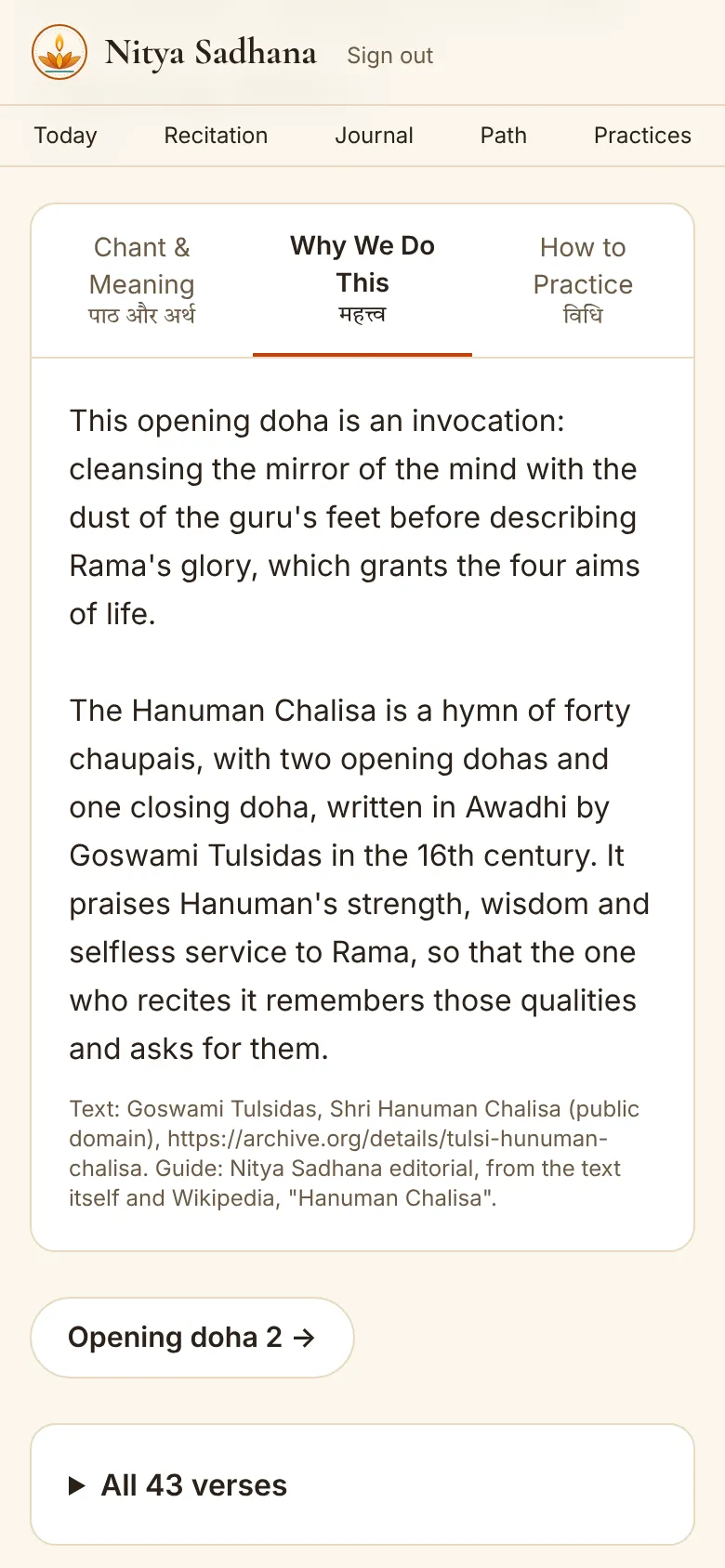
Hanuman Chalisa, bhajan and chanting, with audio chant and meaning.
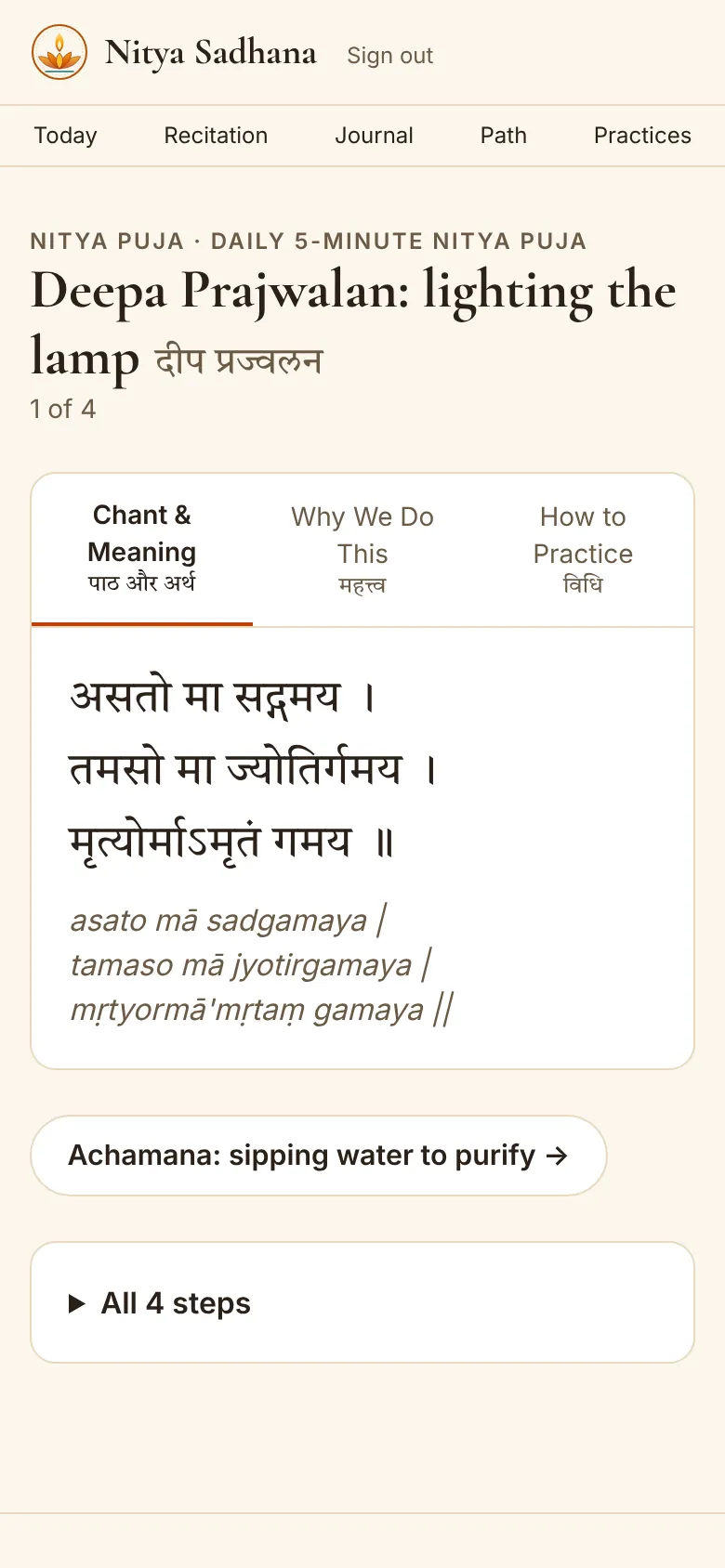
The why and how of puja and the temple, on the days you choose.
You can keep what you already do and add one of these beside it. Find your path suggests where to start from four short questions.
1. Sacred Action: Nitya Puja and the temple. Lighting a lamp, offering flowers, visiting the temple on your day of the week. Ritual teaches the body and the senses to remember what the mind forgets. Its heart is offering: doing an action for something larger than ourselves. The Gita calls this action without clinging to the fruit (Gita 2.47, 3.9).
2. Devotional Connection: Nitya Upasana, bhajan and chanting. Singing the Hanuman Chalisa, listening to Sundarkand, joining a kirtan, repeating a name in japa. Upasana means "sitting near": devotion keeps us close to the Divine through sound, feeling and love. The Gita's twelfth chapter is devoted to this path of bhakti.
3. Scriptural Foundation: Nitya Gita. Reading the Bhagavad Gita verse by verse, slowly, with a trusted commentary beside it. Scripture gives devotion and ritual their meaning, so that we know why we light the lamp and what the chant is pointing to.
4. Inner Reflection: Dhyana and life application. A few quiet minutes, a question carried through the day, a line written in a journal. This is where everything we hear, sing and read becomes our own experience, which the tradition calls anubhava.
None of these doors is "beginner" or "advanced". A lifelong temple-goer may never have read the Gita, and a Gita scholar may never have sung a bhajan. Most people grow by keeping the door they love and gently opening the next one.